The Vardenghast Swarm
Drifting through the void come star-eclipsing shoals of immense creatures whose cephalopodic forms bristle with spines and feeder tendrils. Each of these living vessels is host to thousands upon thousands of dormant warrior-forms, ready to wake from their slumber when the hive fleet locates its next meal.
Welcome to the rules section of Codex: Tyranids. Whether forging your own tales of glory and infamy with narrative play or pitting yourself against your opponents in nail-biting matched play contests, this page present all the rules you will need to bring your Tyranids collection to life on the tabletop.Books
| Book | Kind | Edition | Version | Last update |
 Warhammer 40,000: The App Warhammer 40,000: The App | ||||
| Warhammer 40,000: The App | Rulebook | 11 | 2.7.1 | October 2026 |
Keywords
The keywords presented in this section have a number of special features:
- CLICK on the link to open the tooltip.
- The number in parentheses indicates the number of datasheets containing this keyword. This number represents the total number of datasheets in the faction, regardless of the filter.
- The list does not include named keywords that match the datasheet’s name (unless there are other datasheets with such a keyword).
Army Rules
Synapse
Some Tyranids serve as synaptic conduits or nodal relays through which a portion of the Hive Mind’s iron will flows, overriding the natural instincts of the swarm to direct the teeming warrior-beasts to function as a single, gestalt organism on the battlefield.
If your Army Faction is TYRANIDS, while a TYRANIDS unit from your army is within 6" of one or more friendly SYNAPSE models, that TYRANIDS unit is said to be within Synapse Range of that model and of your army. While a TYRANIDS unit from your army is within Synapse Range of your army:- Each time that unit takes a Battle-shock test, take that test on 3D6 instead of 2D6.
- Each time a model in that unit makes a melee attack, add 1 to the Strength characteristic of that attack.
Errata
- Each time that unit takes a Battle-shock test, take that test on 3D6 instead of 2D6.
- Each time a model in that unit makes a melee attack, add 1 to the Strength characteristic of that attack.’
Shadow in the Warp
Tyranids flood the battlefield with the psychic signature of the hive fleet - an icy, alien dread that gnaws at the minds of their prey and smothers even the most stalwart courage. When faced with such unfathomable horror, many are driven insane or suffer catastrophic neural damage.
If your Army Faction is TYRANIDS, once per battle, in either player’s Command phase, if one or more units from your army with this ability are on the battlefield, you can unleash the Shadow in the Warp. When you do, each enemy unit on the battlefield must take a Battle-shock test. Each time an enemy unit takes such a Battle-shock test, if it is within 6" of one or more SYNAPSE units from your army, subtract 1 from that test.FAQ / Errata
| Q: | Can units targeted by the Shadow in the Warp army rule use the Insane Bravery Stratagem? |
| A: | No. Insane Bravery can only be used in your Command phase. |
Primary Mission
The Hive Mind’s imperatives are clear: overcome the enemy. Drive them from their holdfasts and bury them with weight of numbers. Prepare this world for consumption.
The Vardenghast Swarm 1DP
1DP
Datasheets
- 1 Vardenghast Swarm Von Ryan's Leapers (3 models)
- 1 Terror of Vardenghast (1 model)
- 1 Vardenghast Swarm Barbgaunts (5 models)
- 2 Vardenghast Swarm Termagants (10 models)
- 1 Vardenghast Swarm Psychophage (1 model)
Skittering Hordes
So numerous and horrifying are the teeming organisms of the Vardenghast Swarm that mortal minds struggle to select targets amid the scrambling masses.
Enemy units’ ranged attacks that target a friendly VARDENGHAST SWARM INFANTRY unit not within 12" have -1 to hit rolls.Enhancements
Psychoclastic OverloadUPGRADE When a Psychophage’s retention sacs reach capacity, such a creature can vomit forth a stream of psychocorrosive particles large enough to erode the minds and bodies of an entire squad of enemy soldiers. VARDENGHAST SWARM PSYCHOPHAGE unit only. This unit can re-roll rolls to determine the A of a weapon. |
Adapted Organism Forged by the Hive Mind as a dedicated killer, this warrior organism possesses hyperattuned reflexes, plentiful fast-twitch muscle fibres and additional, ablative layers of chitinous plate. VARDENGHAST SWARM WINGED TYRANID PRIME model only.
|
Stratagems
TARGET: One friendly VARDENGHAST SWARM TERMAGANTS unit.
EFFECT: Select one objective your unit is controlling. That objective is secured.
TARGET: One friendly VARDENGHAST SWARM INFANTRY unit.
EFFECT: Your unit has -6" detection range.
TARGET: That VARDENGHAST SWARM unit.
EFFECT: Your unit can change that advance roll to a 6.
Datasheets
MELEE WEAPONS | RANGE | A | WS | S | AP | D | |
| Prime Talons | |||||||
| Prime Talons | Melee | 6 | 2+ | 6 | -1 | 2 | |
| ARMY RULES | Shadow in the Warp, Synapse |
- On a 4+, do not remove this model from the battlefield. When your unit has fought, or at the end of the phase (whichever comes first), this model is removed from the battlefield.
- Select one friendly unengaged VARDENGHAST SWARM TERMAGANTS unit. That unit heals 2D6 wounds.
- Or: Select one friendly destroyed VARDENGHAST SWARM TERMAGANTS unit. That unit heals 10 wounds and is placed in strategic reserves.
- 1 Terror of Vardenghast model
TYRANIDS
RANGED WEAPONS | RANGE | A | BS | S | AP | D | |
| Barblauncher BLAST 1 Heavy | |||||||
| Barblauncher BLAST 1 Heavy | 24" | D6 | 4+ | 5 | 0 | 1 | |
MELEE WEAPONS | RANGE | A | WS | S | AP | D | |
| Chitinous Claws and Teeth | |||||||
| Chitinous Claws and Teeth | Melee | 1 | 4+ | 4 | 0 | 1 | |
| ARMY RULES | Shadow in the Warp, Synapse |
- While a unit is pinned, that unit:
- Has -2" M.
- Has -2 to advance rolls and charge rolls.
- 5 Barbgaunt models
TYRANIDS
RANGED WEAPONS | RANGE | A | BS | S | AP | D | |
| Psychoclastic Torrent Ignores Cover Torrent | |||||||
| Psychoclastic Torrent Ignores Cover Torrent | 12" | D6 | 3+ | 6 | -1 | 1 | |
MELEE WEAPONS | RANGE | A | WS | S | AP | D | |
| Talons and Betentacled Maw Anti-Psyker 4+ Devastating Wounds | |||||||
| Talons and Betentacled Maw Anti-Psyker 4+ Devastating Wounds | Melee | 6 | 3+ | 6 | -2 | 2 | |
| ARMY RULES | Shadow in the Warp, Synapse |
- A unit below starting strength have +1 to hit rolls.
- A unit below half-strength have +1 to wound rolls.
- 1 Psychophage model
TYRANIDS
RANGED WEAPONS | RANGE | A | BS | S | AP | D | |
| Fleshborer ASSAULT | |||||||
| Fleshborer ASSAULT | 18" | 1 | 4+ | 5 | 0 | 1 | |
MELEE WEAPONS | RANGE | A | WS | S | AP | D | |
| Chitinous Claws and Teeth | |||||||
| Chitinous Claws and Teeth | Melee | 1 | 4+ | 3 | 0 | 1 | |
| ARMY RULES | Shadow in the Warp, Synapse |
- 10 Termagant models
TYRANIDS
MELEE WEAPONS | RANGE | A | WS | S | AP | D | |
| Chitinous Talons | |||||||
| Chitinous Talons | Melee | 6 | 3+ | 5 | -1 | 1 | |
| ARMY RULES | Shadow in the Warp, Synapse |
- That use is -1 CP.
- That use does not prevent any uses of that stratagem on other units this phase.
- 3 Von Ryan's Leaper models
TYRANIDS
The BATTLELINE keyword is used in the following The Vardenghast Swarm datasheets:
The CHARACTER keyword is used in the following The Vardenghast Swarm datasheets:
The FLY keyword is used in the following The Vardenghast Swarm datasheets:
The INFANTRY keyword is used in the following The Vardenghast Swarm datasheets:
The MONSTER keyword is used in the following The Vardenghast Swarm datasheets:
The SMOKE keyword is used in the following The Vardenghast Swarm datasheets:
The TYRANIDS keyword is used in the following The Vardenghast Swarm datasheets:
The VANGUARD INVADER keyword is used in the following The Vardenghast Swarm datasheets:
The VARDENGHAST SWARM keyword is used in the following The Vardenghast Swarm datasheets:
- If that roll succeeds, that unit does not become battle-shocked.
- If that roll fails, that unit, and each model in it, is battle-shocked.
While a unit is battle-shocked:
- The Objective Control (OC) characteristic of all of its models is modified to ‘-’ (02.02).
- Its controlling player cannot target that unit with stratagems (15).
- It is not eligible to start an action (16), and any action it has started cannot be completed.
- Battlefield Morale 01.07.01
- Battle-shock Test 01.07.02
FAQ
| Q: | If a unit has a rule that allows it to start an action when it is battle-shocked can it also continue doing that action if it becomes battle-shocked after starting an action? |
| A: | Yes |
| Q: | If a unit becomes battle-shocked after starting an action does it stop performing that action? |
| A: | Yes |
The VARDENGHAST SWARM and INFANTRY keywords are used in the following The Vardenghast Swarm datasheets:
Many deadly weapons can inflict fatal injuries on any foe, no matter their resilience.
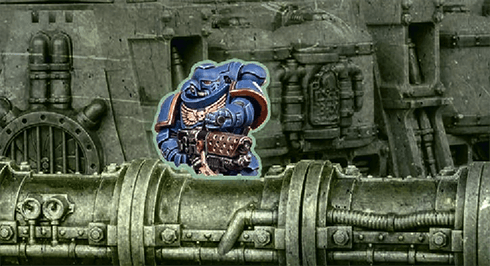
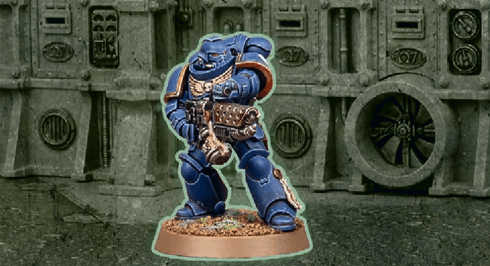
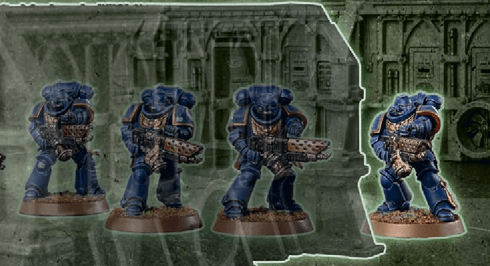
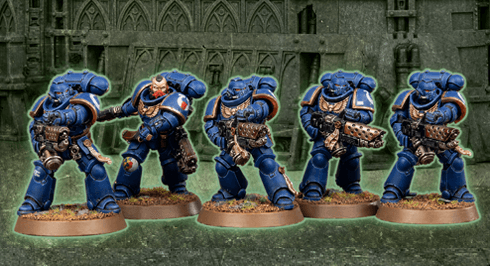
Each time an attack made with a [LETHAL HITS] weapon results in a critical hit, you can choose for that attack to automatically wound the target.Other models and units can be either visible or fully visible to the observing model, as shown below. Note that terrain applies additional rules to visibility (13.07).
FAQ
| Q: | When checking line of sight from one model to another, is this drawn between the bases of those models, or between any part of them? |
| A: | Line of sight is drawn from any part of the observing model to any part of the model being observed. |
EFFECT: Your unit shoots as described in Making Attacks (04).
WHILE SHOOTING:
- You can only target one visible enemy unit within 24" of your unit (and only if it is an eligible target).
- Each attack only hits on an unmodified hit roll of 6 (irrespective of the attacking weapon’s BS characteristic or any modifiers).
- You cannot re-roll hit rolls.
|
FAQ
| Q: | My attack has a rule that means it results in a critical hit on a hit roll of 4+. Does this work when snap shooting? |
| A: | Unless otherwise stated, no: when snap shooting, each attack only hits on a roll of 6. |
| Q: | My attack has a rule that means it results in a critical hit on a hit roll of 4+, and I would otherwise need a 5+ to hit. Does a 4+ hit? |
| A: | Yes, except when snap shooting: when snap shooting, each attack only hits on a roll of 6. |
When a model is destroyed, first resolve any rules that are triggered when it is destroyed, then it is removed from the battlefield. If any such rules apply, and if the model was destroyed as the result of an attack, unless otherwise stated, those rules are only resolved and that model is only removed after the attacking unit’s attacks have been resolved. Unless otherwise stated, destroyed models and units cannot use abilities or be selected or targeted by rules.
Some rules only trigger if an enemy model or unit was destroyed by you, or by a model or unit from your army. This means that the enemy model or unit was destroyed by an attack made by a model from your army, or by a player rule you have. Enemy models or units that are destroyed by any other means are not destroyed by you, or by a model or unit from your army.
- Create Groups: Divide all models in the target unit into the following groups, as many times as required:
- One group for each CHARACTER model.
- One group for all other models with the same W, Sv and InSv characteristics.
- Allocation Order: Declare the order in which those groups will have attacks allocated to them, applying all of the following:
- If a non-CHARACTER group contains a model that has lost one or more wounds, that group must be first in the allocation order.
- No CHARACTER group can be earlier in the allocation order than a non-CHARACTER group.
- CHARACTER groups containing a model that has lost one or more wounds must be earlier in the allocation order than CHARACTER groups containing no wounded models.
- Make Save Rolls: The opposing player makes one save roll for each attack that wounded the target by rolling one D6.
FAQ
| Q: | When declaring the allocation order of groups in my unit I have more than one non-CHARACTER groups that contain a model with a missing wound, how must I select the order? |
| A: | Those groups can be selected in an order of your choosing but must be in an order that makes them come before any non-CHARACTER groups that do not contain a model with a missing wound. |
| Q: | I have a unit being attacked with weapons that will modify some of their save rolls to be worse then 6 should I make those save rolls? |
| A: | Yes, because other models in your unit may have Sv’s that are better those models you’ve mentioned, this means that enough save rolls could be allocated to the those models that the rest of the results are not greater then the Sv’s of the other models in your unit. |
| Q: | Can I group or allocate a wound to a destroyed model? |
| A: | No. |
At the end of each phase and turn, to determine a player’s level of control over an objective, add together the OC characteristics of all the models in that player’s army that are within range of that objective:
- The player who has the highest level of control over that objective controls that objective.
- If both players have the same level of control over that objective, unless that objective is secured (see below), that objective is not controlled by either player.
While one or more units from a player’s army are within range of an objective that player controls, for each of those units that contains one or more models with an OC characteristic of 1 or more, that unit is said to be controlling that objective.
FAQ
| Q: | Is being within range of a terrain objective the same as being within range of an objective marker? |
| A: | Yes. |
FAQ
| Q: | If my unit has taken control of an objective at the end of my movement phase and that unit has as an ability that secures an objective they control, can they secure that objective? |
| A: | Yes |
- That model has the INFANTRY/BEASTS/SWARM keyword and is within a terrain area that contains one or more light/dense terrain features.
- That model’s unit did not make one or more ranged attacks during this turn or during the previous turn.
Errata
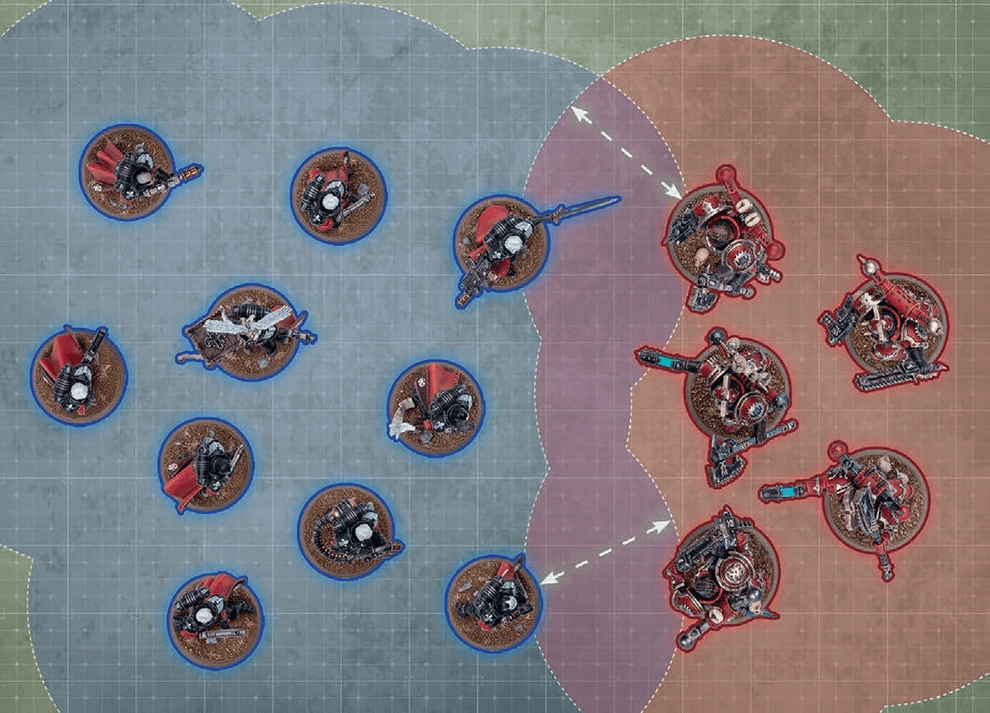
- While a friendly model is within engagement range of one or more enemy models, those models – and the units they belong to – are engaged with each other.
- While a unit contains no engaged models, that unit is unengaged.
FAQ
| Q: | Does my model or unit become engaged while moving through a enemy units engagement range during a move? |
| A: | No |
EFFECT: Your unit moves as described in Moving (03).
BEFORE MOVING: Make an advance roll by rolling one D6.
AFTER MOVING:
- Your unit must be unengaged.
- Until the end of the turn, unless otherwise stated, your unit is not eligible to declare a charge or start an action.
Tyranids flood the battlefield with the psychic signature of the hive fleet - an icy, alien dread that gnaws at the minds of their prey and smothers even the most stalwart courage. When faced with such unfathomable horror, many are driven insane or suffer catastrophic neural damage.
If your Army Faction is TYRANIDS, once per battle, in either player’s Command phase, if one or more units from your army with this ability are on the battlefield, you can unleash the Shadow in the Warp. When you do, each enemy unit on the battlefield must take a Battle-shock test. Each time an enemy unit takes such a Battle-shock test, if it is within 6" of one or more SYNAPSE units from your army, subtract 1 from that test.FAQ / Errata
| Q: | Can units targeted by the Shadow in the Warp army rule use the Insane Bravery Stratagem? |
| A: | No. Insane Bravery can only be used in your Command phase. |
Some Tyranids serve as synaptic conduits or nodal relays through which a portion of the Hive Mind’s iron will flows, overriding the natural instincts of the swarm to direct the teeming warrior-beasts to function as a single, gestalt organism on the battlefield.
If your Army Faction is TYRANIDS, while a TYRANIDS unit from your army is within 6" of one or more friendly SYNAPSE models, that TYRANIDS unit is said to be within Synapse Range of that model and of your army. While a TYRANIDS unit from your army is within Synapse Range of your army:- Each time that unit takes a Battle-shock test, take that test on 3D6 instead of 2D6.
- Each time a model in that unit makes a melee attack, add 1 to the Strength characteristic of that attack.
Errata
- Each time that unit takes a Battle-shock test, take that test on 3D6 instead of 2D6.
- Each time a model in that unit makes a melee attack, add 1 to the Strength characteristic of that attack.’
- If that unit has one or more models that does not have its full wounds remaining, select one of those models; that model regains one lost wound.
- If all models in that unit have their starting number of wounds, but one or more models from that unit are currently destroyed, revive one of those destroyed models (excluding CHARACTER models), with one wound remaining.
If a rule states that a model heals or regains a number of wounds, only that model can regain wounds up to its starting number of wounds. Any excess regained wounds are lost and do not cause a destroyed model from that unit to revive.
Random Attacks: If a weapon has a random A characteristic, that characteristic is determined when generating attacks for that weapon at the Resolve Attacks step (04.03). If several weapons with random A characteristics are making identical attacks, generate the attacks for each of those weapons individually, and group them all together.
Random Damage: If a weapon has a random D characteristic, then each time an attack made with it inflicts damage, the controlling player determines that weapon’s characteristic when the opposing player has selected a model in the target unit to allocate that attack to.
When determining a random D characteristic, the dice roll made is called a damage roll.
Where a D characteristic includes an operator (e.g. a ‘+’, as in D6+1), the value after the operator is part of that D characteristic – it is not a modifier.
Other Random Characteristics: For all other characteristics, roll to determine the value on an individual, per-model or per-weapon basis each time that characteristic is required.
Weapons powered by unstable and dangerous energy sources pose a substantial risk to the wielder and those that stand beside them.
Each time a unit is selected to shoot or selected to fight, after that unit has resolved all of its attacks, make a number of hazard rolls (06.03) for that unit equal to the number of [HAZARDOUS] weapons you selected in the Select Weapons step.- Select Model: Select one model in that unit by following the first instruction below that applies:

If a non-CHARACTER model in that unit has lost one or more wounds, you must select that model. Otherwise, if that unit contains one or more non-CHARACTER models, you must select one of those models. Otherwise, if one or more CHARACTER models in that unit have lost one or more wounds, you must select one of those models. Otherwise, you must select one CHARACTER model in that unit. - Resolve Damage: The selected model loses 1 wound. If this reduces that model’s remaining wounds to 0, it is destroyed.
MORTAL WOUNDS AND NORMAL DAMAGE
When resolving attack dice, if those attacks inflict a mixture of both mortal wounds and normal damage, resolve all of the normal damage first, then resolve all of the mortal wounds.
- Normal Damage 06.02.01
FAQ
| Q: | I have a rule that triggers when a mortal wound is allocated to a model, when does this happen? |
| A: | When you select a model in the Select Model step of Mortal Wounds (06.02). |
FAQ
| Q: | I failed hazard rolls from [Hazardous] weapons, do those mortal wounds have to be allocated to the models with the [HAZARDOUS] weapons? |
| A: | No, you allocate the mortal wounds to the unit as per Mortal Wounds (06.02). (This represents Bob the guardsmen picking up his fallen squad mates plasma gun or that the twisting power of James the Chaos Sorcerer pulling his followers into the warp.) |
| Q: | If a rule says my unit must make a hazard roll does every model in the unit make a hazard roll? |
| A: | No, the unit would make 1 single hazard roll. |
The most potent weapons strike with such power that they make a mockery of armour and can cleave through several foes.
Each time an attack made with a [DEVASTATING WOUNDS] weapon results in a critical wound, the attack sequence for that attack ends and the target unit suffers a number of mortal wounds equal to the D characteristic of that weapon. These are inflicted after resolving any normal damage inflicted by those attacks.Mortal wounds inflicted by [DEVASTATING WOUNDS] weapons can damage a maximum of one model for each critical wound; any remaining mortal wounds inflicted by that attack are lost.
- If the target unit is an attached unit, use the highest T characteristic amongst bodyguard models in that unit that are on the battlefield.
- Use the highest T characteristic amongst models in that unit that are on the battlefield.
| ||||||||||||||||||||||||||||||
- Multiple Toughness Characteristics 05.02.01
- Advance roll
- Charge roll
- Damage roll
- Hazard roll
- Hit roll
- Save roll
- Wound roll
- A roll to determine the number of attacks generated with a weapon.
TARGET: That unit or model.
EFFECT: You re-roll that roll. If you are rolling more than one dice together, select one of those dice to re-roll (excluding charge rolls, which you must re-roll in full).
TARGET: That unit.
EFFECT: That battle-shock roll is automatically successful.
RESTRICTIONS: You cannot use this stratagem more than once per battle.
EFFECT: Your unit shoots as described in Making Attacks (04).
WHILE SHOOTING:
- You can only target one visible enemy unit within 24" of your unit (and only if it is an eligible target).
- Each attack only hits on an unmodified hit roll of 6 (irrespective of the attacking weapon’s BS characteristic or any modifiers).
- You cannot re-roll hit rolls.
TARGET: One friendly unengaged unit (excluding TITANIC units).
EFFECT: Your unit shoots using snap shooting.
TARGET: One friendly unengaged unit within 12" of one or more enemy units. You can only select a VEHICLE unit if it is a CHARACTER/WALKER unit.
EFFECT: Resolve a charge with your unit (11.02). While doing so, before making the charge roll, you must select one of the following modes:
- Leap to Defend: When selecting charge targets, you can only select enemy units that made a charge move this phase and are within the maximum distance.
- Into the Fray:
- When making the charge roll, if the result is greater than 6 (after modifiers), change it to 6.
- When selecting charge targets, you can select any enemy units that are within 6" of your unit and within the maximum distance.
Precision attacks can pick high-value targets out in a crowd.
While resolving attacks made with one or more [PRECISION] weapons, at the start of the Allocation Order step (05.03), if the target unit contains one or more CHARACTER models visible to one or more of the attacking models, the active player can select one allocation group that contains one of those visible CHARACTER models. If they do, until those attacks are resolved, or until that CHARACTER group is destroyed (whichever happens first), that CHARACTER group is the current allocation group.TARGET: That CHARACTER unit.
EFFECT: Select one CHARACTER model in your unit. Until the end of the phase, that model’s melee weapons have the [PRECISION] ability.
Those possessed of lightning-fast reactions may strike before the opponent can react.
While every model in a unit has this ability, that unit is a Fights First unit.See the Resolve Fights First Combats step in the Fight phase (12.04).
TARGET: One friendly unit that is eligible to fight.
EFFECT: Until the end of the phase, your unit has the Fights First ability and it must be the next unit you select to fight (12.04).
TARGET: That VARDENGHAST SWARM unit.
EFFECT: Your unit can change that advance roll to a 6.
TARGET: One friendly VARDENGHAST SWARM INFANTRY unit.
EFFECT: Your unit has -6" detection range.
So numerous and horrifying are the teeming organisms of the Vardenghast Swarm that mortal minds struggle to select targets amid the scrambling masses.
Enemy units’ ranged attacks that target a friendly VARDENGHAST SWARM INFANTRY unit not within 12" have -1 to hit rolls.Forged by the Hive Mind as a dedicated killer, this warrior organism possesses hyperattuned reflexes, plentiful fast-twitch muscle fibres and additional, ablative layers of chitinous plate.
VARDENGHAST SWARM WINGED TYRANID PRIME model only.
- This model has 4+ InSv.
- This model’s melee attacks have +2 AP.
High-explosive rounds can fell several warriors in a single blast, but firing them too close to comrades is unwise.
Each time you gather attack dice for a [BLAST] weapon, add one additional attack dice for every five models that were in the target unit in the Select Targets step (rounding down).If this ability takes the form [BLAST X], each time you gather attack dice for such a weapon, add X additional attack dice for every five models that were in the target unit in the Select Targets step (rounding down) instead.
Heavy weapons are amongst the biggest guns on the battlefield, but require bracing to fire at full effect.
In your Shooting phase, each time an attack is made with a [HEAVY] weapon, add 1 to the hit roll if all of the following apply to the attacking unit:- That unit is unengaged.
- That unit was not set up on the battlefield this turn.
- No model in that unit has moved more than 3" this turn.
Some rules refer to units being below starting strength, or at – or below – half-strength. The meaning of these terms varies depending on a unit’s starting strength, as shown below.
|
The hardiest warriors refuse to be laid low, even by wounds that should by all rights prove lethal.
This ability always takes the form Feel No Pain X+. Each time a model with this ability would lose a wound, roll one D6: on an X+, that wound is not lost.- Place a well-defined boundary (such as a base or mat) in each location you want to furnish with terrain, then place one or more terrain features wholly within that boundary.
- Place one terrain feature directly on the battlefield.
- Place two or more terrain features directly on the battlefield in such a way that together they define the boundary of an area.
In each case, the area of the battlefield occupied by that boundary or terrain feature is known as a terrain area. A mission’s deployment map may define the location and dimensions of each terrain area. Otherwise, players must agree on this before the battle.
FAQ
| Q: | Are models that are within the boundary of a terrain area, but not on the ground floor of a terrain area (e.g. overhanging parts of FRAME VEHICLES or models on terrain features that are within that terrain area) within that terrain area? |
| A: | Yes |
- That model has the INFANTRY/BEASTS/SWARM keyword and is within a terrain area.
- That model is not fully visible to the attacking model due to one or more intervening terrain features and/or one or more intervening obscuring terrain areas (see below).
Each time a ranged attack targets a unit that has the benefit of cover against it, worsen the BS characteristic of that attack by 1.
FAQ
| Q: | When my unit shoots at another unit, how does it work if some models in the target unit are fully visible to some models in my unit, while others are within a terrain area/not fully visible? |
| A: | For each attacking model in your unit, determine whether the target unit has the benefit of cover, as described in Terrain and Visibility. In this scenario, the target unit will likely have the benefit of cover against some of the attacking models, but not all. This means that, in an example unit where all attacking models are using the same weapon, when you get to the Resolve Attacks step of the Attack Sequence, you will collect dice for attacks made by models against which the target unit has the benefit of cover separately from the dice for attacks made by models against which the target unit does not have the benefit of cover. |
The stealthiest warriors can evade the attentions, and the bullets, of their foes.
If every model in a unit has this ability, each time a ranged attack targets that unit, that unit has the benefit of cover against that attack (13.08).Some weapons are designed to root enemy formations out of entrenched positions.
Each time an attack is made with an [IGNORES COVER] weapon, the target cannot have the benefit of cover against that attack (13.08), including from rules that give a model or unit the benefit of cover (e.g. Stealth).Torrent weapons project clouds of fire, gas or other lethal substances that few foes can hope to evade.
Each time an attack is made with a [TORRENT] weapon, that attack automatically hits the target.Certain weapons are the bane of particular foes.
This ability always takes the form [ANTI-X Y+]. Each time an attack is made with an [ANTI] weapon, if the target unit has the keyword denoted by X, an unmodified wound roll of Y+ is a critical wound.TARGET: One friendly SMOKE unit.
EFFECT: Until the end of the phase, each time an attack targets either your SMOKE unit, or a unit that is not fully visible to the attacking model because of one or more models in your SMOKE unit, the target has the benefit of cover against that attack (13.08).
When a Psychophage’s retention sacs reach capacity, such a creature can vomit forth a stream of psychocorrosive particles large enough to erode the minds and bodies of an entire squad of enemy soldiers.
VARDENGHAST SWARM PSYCHOPHAGE unit only. This unit can re-roll rolls to determine the A of a weapon.
EFFECT: Your unit moves as described in Moving (03).
AFTER MOVING: Your unit must be unengaged.
- Unengaged and made an advance move this turn.
- Has one or more [ASSAULT] weapons.
WHILE SHOOTING: You can only select [ASSAULT] weapons to make attacks with.
AFTER SHOOTING: Until the end of the phase, your unit is not eligible to start an action.
Folding stocks, shortened barrels or lightweight construction enable some weapons to be easily fired on the move.
Units containing one or more models with an [ASSAULT] weapon can shoot using assault shooting (10.05).TARGET: One friendly VARDENGHAST SWARM TERMAGANTS unit.
EFFECT: Select one objective your unit is controlling. That objective is secured.